Replacing a thermal fuse in a Whirlpool dryer is a common repair when the dryer will not start or will not heat.
The process is straightforward in most rear-access models.
For a complete overview of testing and general replacement steps, see Dryer Thermal Fuse: Complete Guide (Symptoms, Testing & Replacement).
Common Symptoms in Whirlpool Dryers
A blown thermal fuse in a Whirlpool dryer often causes:
-
Dryer will not start at all
-
No response when pressing Start
-
Dryer runs but produces no heat (on some models)
Testing with a multimeter is the most reliable way to confirm failure.
Where the Thermal Fuse Is Located
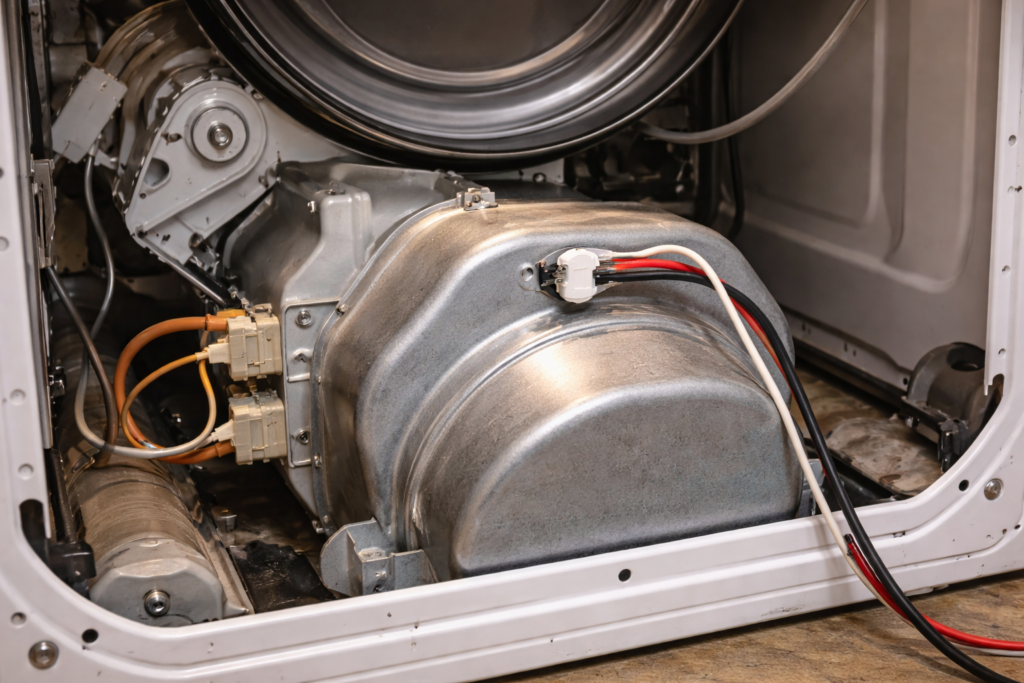
In most Whirlpool dryers, the thermal fuse is mounted on the blower housing.
To access it:
-
Unplug the dryer.
-
Pull the dryer away from the wall.
-
Remove the rear access panel.
The fuse is usually located near the bottom of the dryer, attached to the blower housing with one screw.
It is typically a small white plastic component with two wires connected.
Step-by-Step Replacement
-
Disconnect power.
-
Remove the rear panel.
-
Locate the thermal fuse on the blower housing.
-
Disconnect the two wire connectors.
-
Remove the mounting screw.
-
Install the new fuse in the same position.
-
Reconnect the wires firmly.
-
Reinstall the rear panel.
Restore power and test the dryer.
Important: Check Airflow Before Finishing
Whirlpool dryers commonly blow thermal fuses due to restricted airflow.
Before considering the repair complete, inspect:
-
Lint filter
-
Vent hose
-
Exterior vent hood
-
Duct behind the dryer
Cleaning the vent system helps prevent repeat failures.
Part Compatibility
Many Whirlpool dryers use a common two-wire thermal fuse mounted on the blower housing.
Always verify:
-
Your exact model number
-
The correct replacement part number
-
Temperature rating
Using the wrong fuse can cause premature failure.